Littleton's Firefighting Water Damage Specialists
Dry the fire scene before mold starts
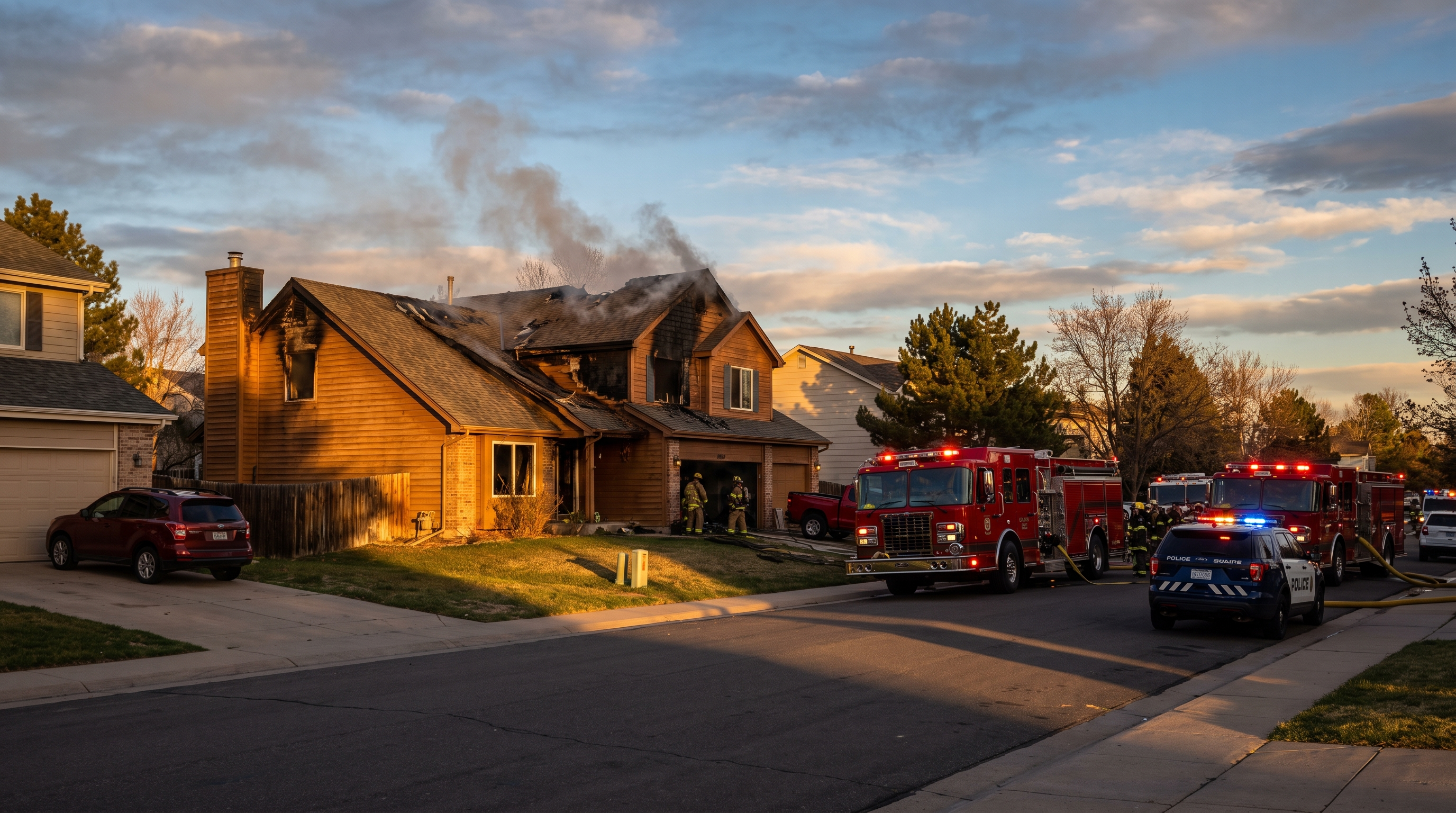
Fire hoses can leave hundreds or thousands of gallons behind, and that water needs attention right away.
Littleton's Firefighting Water Damage Specialists
Fire hoses can leave hundreds or thousands of gallons behind, and that water needs attention right away.
After a Littleton structure fire, firefighting water can run through walls, flooring, cabinets, crawl spaces, and finished basements. The burned area may be upstairs while the largest moisture problem appears below it. If drying starts late, swelling, delamination, mold, and odor can complicate the entire claim.
Colorado's dry air helps some surfaces, but it does not dry trapped water inside assemblies on its own. High altitude also changes how drying equipment performs. Contractors may need to adjust dehumidifier placement, airflow, and monitoring intervals to match local conditions.
Water damage from firefighting is documented separately from smoke and structural repairs. Moisture readings, demolition photos, equipment logs, and drying goals help support the claim and show why certain materials had to be removed.
The goal is not to save everything. The goal is to save what can be dried safely and remove what will trap contamination, odor, or moisture behind finished surfaces.
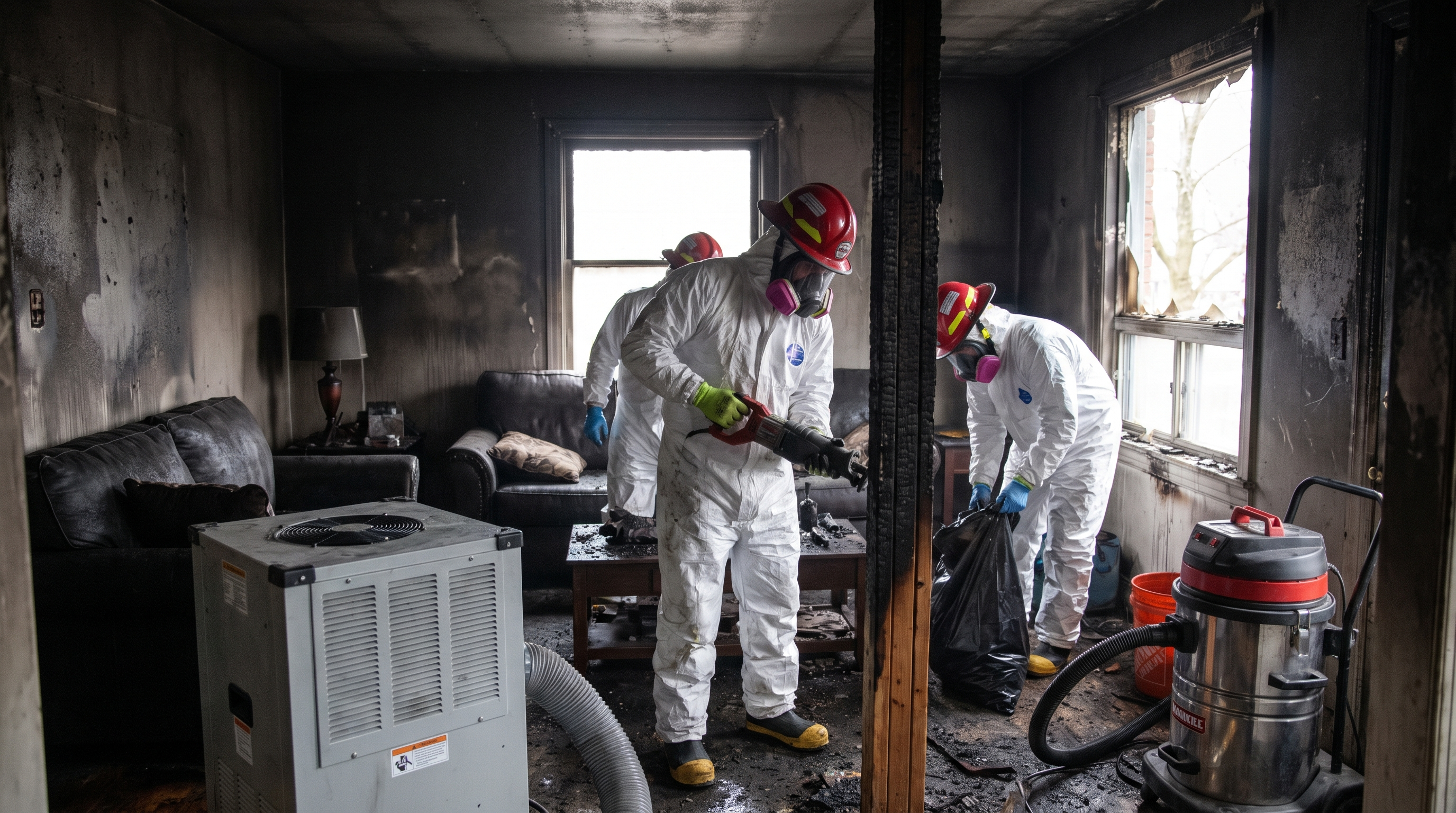
Fire-related water mitigation focuses on fast moisture control while preserving the evidence needed for the insurance claim.
Technicians use meters to track water through floors, walls, ceilings, cabinetry, insulation, and basement areas. The map shows where drying equipment belongs and where demolition may be needed.
Air movers, dehumidifiers, and targeted ventilation dry materials that can remain in place. Equipment readings are logged so progress is visible.
Wet drywall, insulation, flooring, and trim may need removal when they hold water, smoke residue, or contamination. The contractor documents removal before debris leaves the property.
Equipment setup at Littleton's elevation is not the same as sea level drying. Contractors adjust monitoring and placement so trapped moisture is not missed.
Carriers often need proof that water damage came from suppression efforts and required mitigation. Readings and photos make that easier to show.

Get water mitigation started after fire department clearance.
Free — no obligations
The contractor identifies where hose water entered and how it moved through the structure.
Affected materials are checked and mapped so drying or removal decisions are based on measurements.
Air movers, dehumidifiers, and containment are placed to dry salvageable areas without spreading soot.
Readings, photos, and equipment logs are organized for the insurance file and final scope review.